Mission Control

System Status: Operational

I build software like it is meant to survive production.

Mission Control presents how I design, ship, monitor, and improve systems with reliability-first engineering habits.

Engineer
Rashedul Hasan Sojib
Role
Software Engineer | DevOps Enthusiast
Uptime
99.9% curiosity-driven
Current Focus
Cloud infrastructure, automation, and scalable applications.

mission@control:~

$boot: mission-control v1.2.0

$init: loading profile modules...

$ok: deployments indexed (3 services)

$ok: incident ledger mounted (3 records)

$ok: observability stream connected

$hint: run `help` to list available commands

>
Currently learning: distributed tracing patternsExperimenting with: cost-aware cloud architectureImproving: CI signal quality and flaky test reductionReading: incident response and reliability case studiesCurrently learning: distributed tracing patternsExperimenting with: cost-aware cloud architectureImproving: CI signal quality and flaky test reductionReading: incident response and reliability case studies

Control Layer

Deployments

Projects reframed as operational services with environment and health metadata.

ServiceAtlas operations dashboard preview

ServiceAtlas

Environment: Production

Healthy
Next.jsNode.jsPostgreSQLDocker
Latency
184ms
Logs
Automates user onboarding and account provisioning workflows.
Who It Serves
Operations-heavy teams with frequent account setup requests.
Challenge Solved
Removed bottlenecks from manual approval and setup pipelines.
AlertBridge incident routing timeline preview

AlertBridge

Environment: Open Source

Monitoring
NestJSRedisPrometheusGrafana
Latency
235ms
Logs
Routes and enriches multi-channel incident alerts with context.
Who It Serves
Teams managing multiple service owners and noisy alert streams.
Challenge Solved
Lowered alert fatigue by grouping and prioritizing notifications.
Links
Source
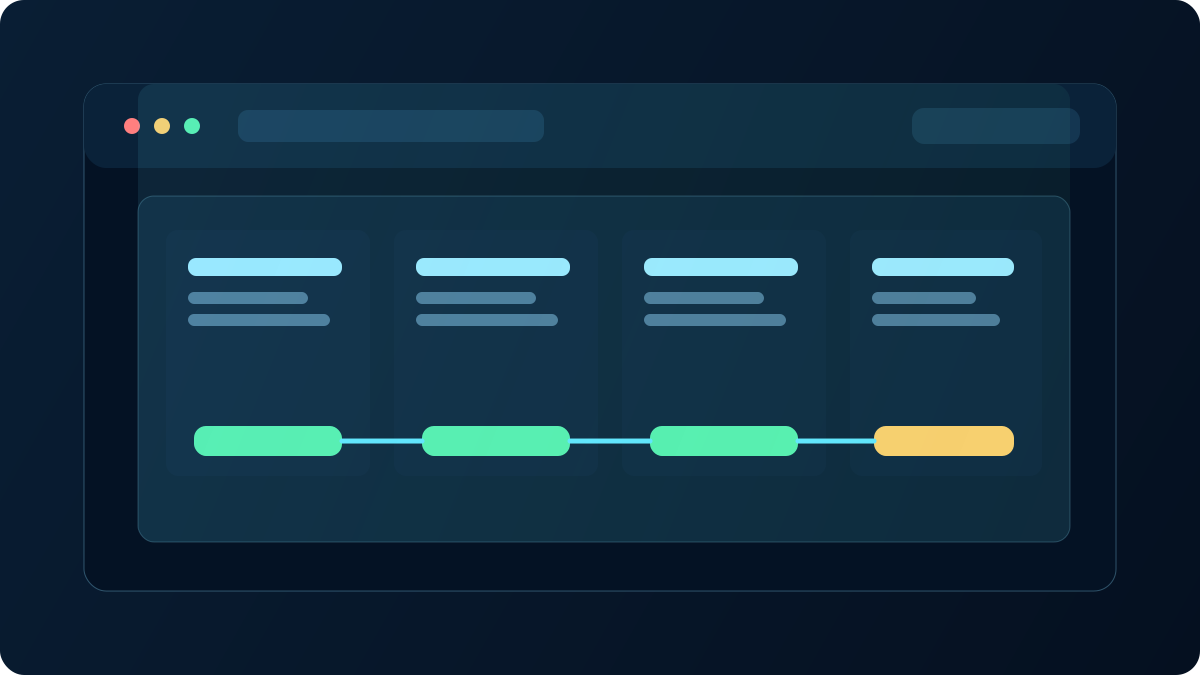
DeployBeacon release readiness panel preview

DeployBeacon

Environment: Lab

Scaling
TypeScriptGitHub ActionsTerraformAzure
Latency
310ms
Logs
A release assistant that validates infra and deployment readiness.
Who It Serves
Small product teams shipping fast with limited DevOps bandwidth.
Challenge Solved
Surfaced configuration drift before release windows.
Links
Source

Control Layer

Infrastructure Layers

A stack view of application, cloud, CI/CD, and observability capabilities.

  1. Application Layer

    Builds resilient product interfaces and backend APIs.

    ReactNext.jsNode.jsTypeScript
  2. CI/CD Layer

    Automates build, test, and deployment with guardrails.

    GitHub ActionsGitLab CIJenkins
  3. Container Layer

    Packages and orchestrates services for reliable delivery.

    DockerKubernetes
  4. Cloud Layer

    Deploys and operates cloud-native infrastructure.

    AWSAzureGCP
  5. IaC Layer

    Codifies infrastructure to reduce drift and manual errors.

    TerraformAnsible
  6. Observability Layer

    Tracks service health, performance, and incidents.

    PrometheusGrafanaELK

Control Layer

Incident Reports

Postmortem-style snapshots that show debugging maturity and reliability mindset.

INC-003: CI pipeline failures due to environment drift

Resolved

Build Success Rate

Before

63%

After

96%

What Broke
Builds passed locally but failed unpredictably in CI.
Why It Mattered
Release cadence slowed and confidence in delivery dropped.
Root Cause
Toolchain version mismatch across local and CI runners.
Fix
Containerized the build environment and pinned dependencies.
Prevention
Added environment parity checks before merge.

INC-006: Latency spike during high-traffic login window

Monitoring

Auth API p95

Before

890ms

After

270ms

What Broke
Authentication API crossed response-time SLO during peak hour.
Why It Mattered
User onboarding dropped when login became unreliable.
Root Cause
An uncached permissions lookup was called on every request.
Fix
Added short-lived cache and query optimization with indexes.
Prevention
Introduced latency budget alerts per endpoint.

INC-009: Missed alerts from webhook retry storm

Closed

Duplicate Alert Volume

Before

4.6x baseline

After

1.2x baseline

What Broke
Duplicate retries overwhelmed notification channels.
Why It Mattered
Real incidents were buried under noisy alerts.
Root Cause
No idempotency key handling in webhook processor.
Fix
Implemented idempotency keys and backoff-aware queuing.
Prevention
Added chaos test for duplicate-delivery scenarios.

Control Layer

Observability Metrics

Static baseline blended with live GitHub-derived signals when available.

Repos Deployed

25

Production, staging, and open-source services shipped.

Cloud Services Used

12

Managed services currently used across app and platform workflows.

Pipelines Built

18

CI/CD pipelines with quality gates and rollout checks.

Bugs Closed

190

Issues resolved across app, infra, and developer tooling.

Automations

31

Repeatable workflows created to reduce operational toil.

Learning Streak

42days

Current continuous learning and experimentation streak.

Years Learning

6yrs

Continuous software engineering and systems learning journey.

Architecture Blueprint

How software delivery, observability, and reliability decisions connect across the stack.

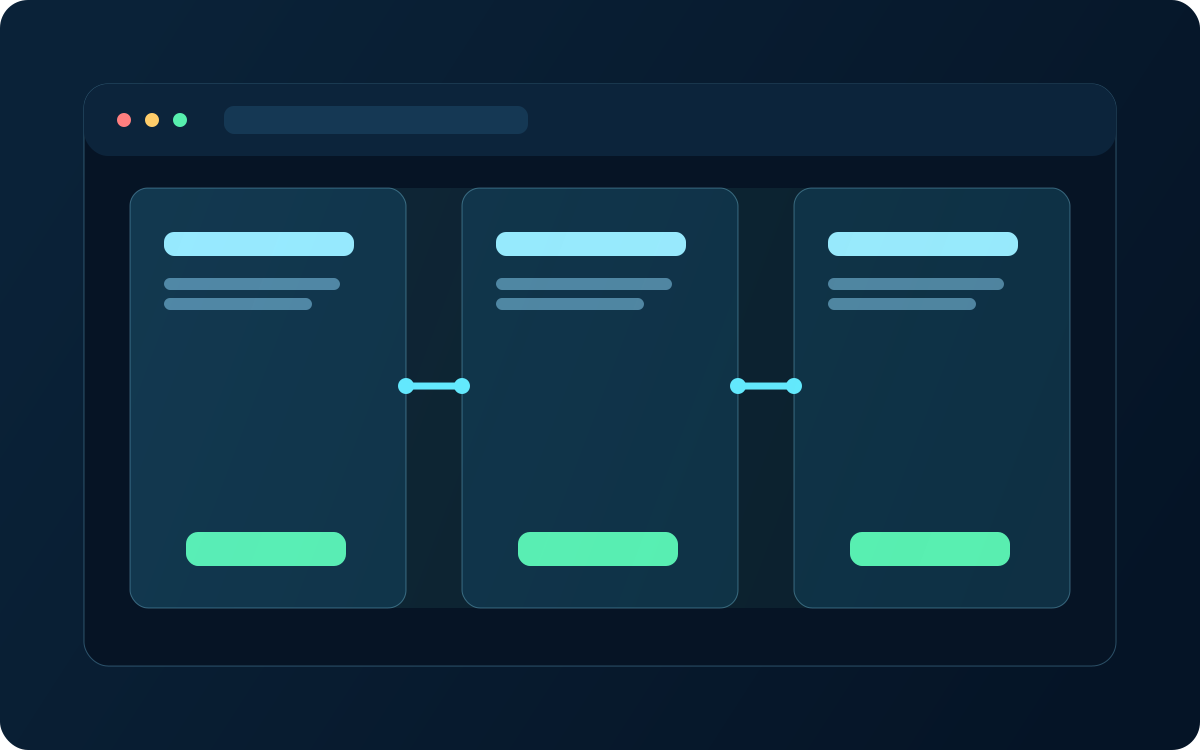
Diagram of plan, quality checks, and progressive delivery flow

Delivery Flow

  • Pull request checks enforce lint, type-safety, and formatting.
  • Staging deploy validates runtime env and infrastructure assumptions.
  • Production rollout uses guarded releases with rollback readiness.
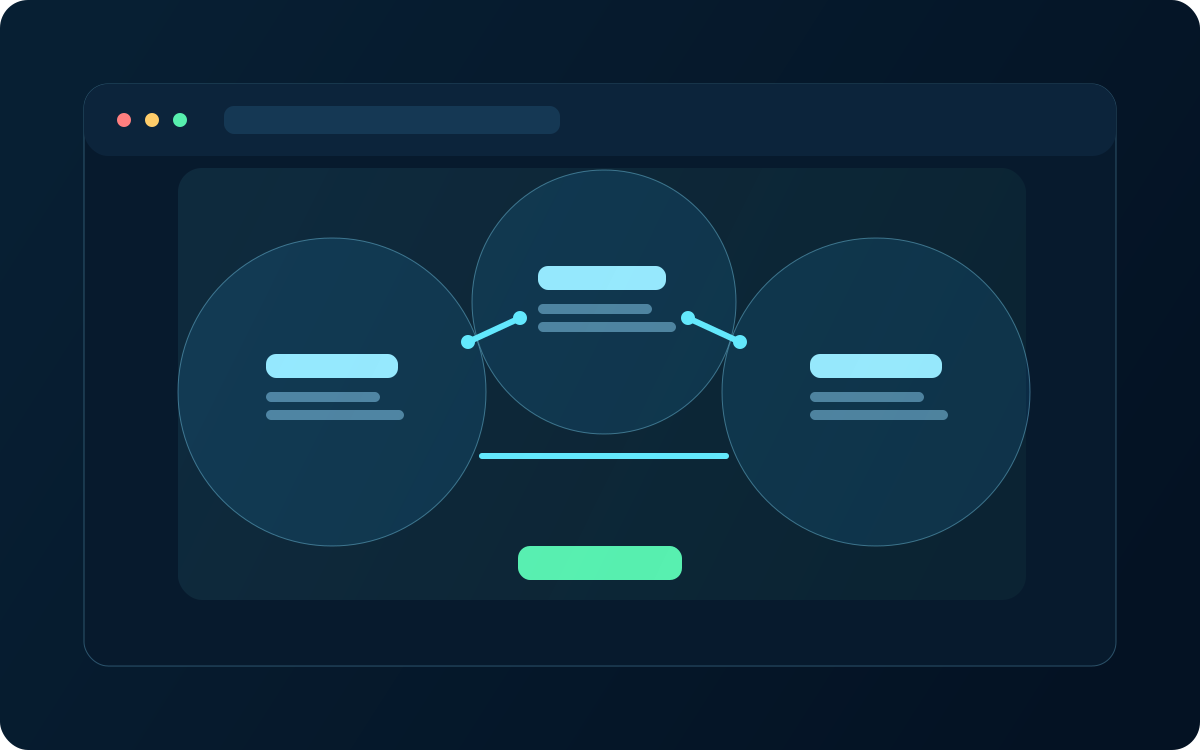
Diagram of metrics, logs, and alert feedback loops

Observability Baseline

  • Service-level metrics with latency and error budget monitoring.
  • Structured logs for incident traceability and postmortem quality.
  • Alert thresholds tuned to reduce noise and improve response time.
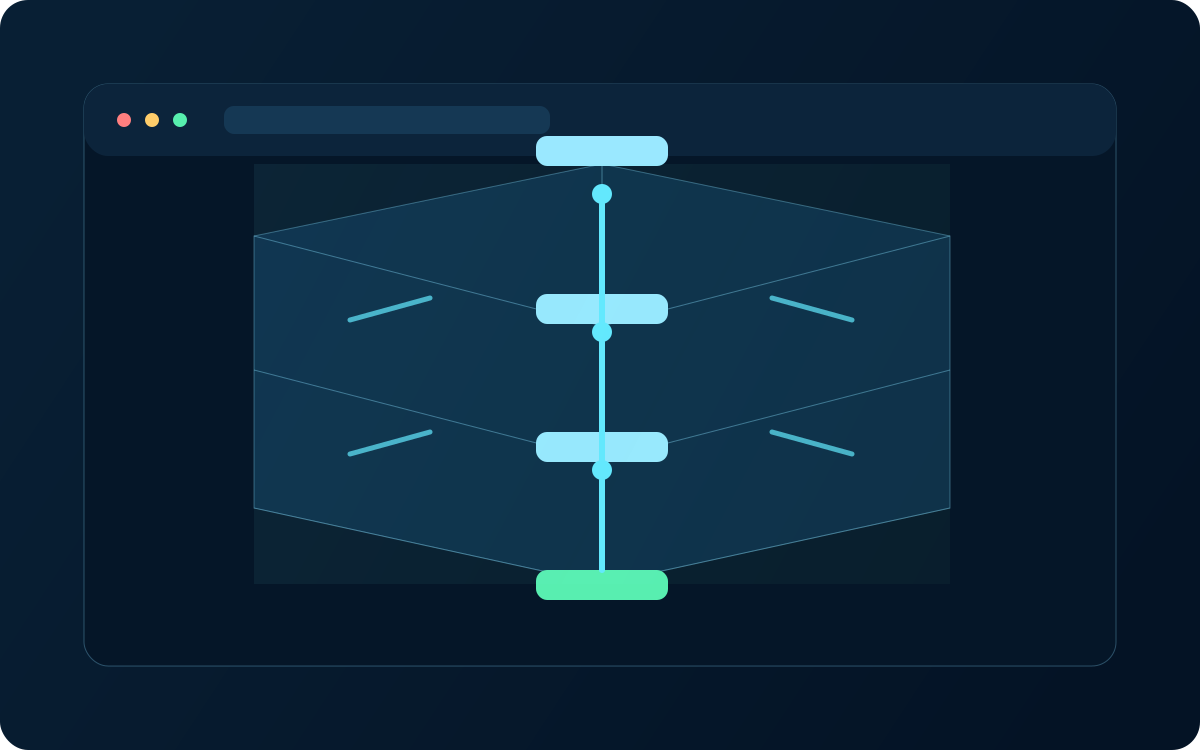
Diagram of infrastructure as code, hardening cycles, and runbooks

Reliability Practices

  • Infrastructure as code to prevent manual drift.
  • Incremental hardening based on recurring failure patterns.
  • Operational runbooks documented for repeatable incident handling.